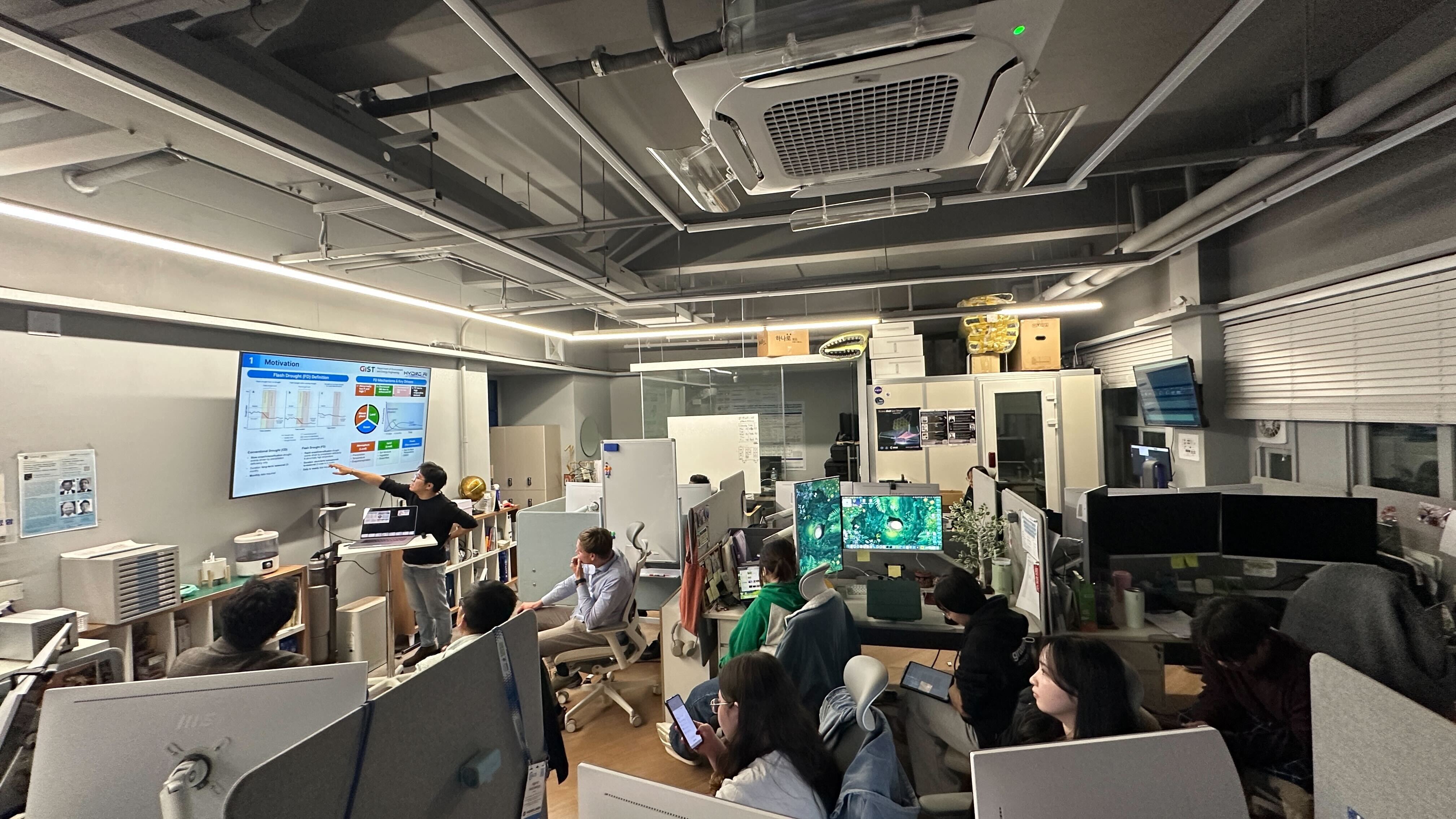
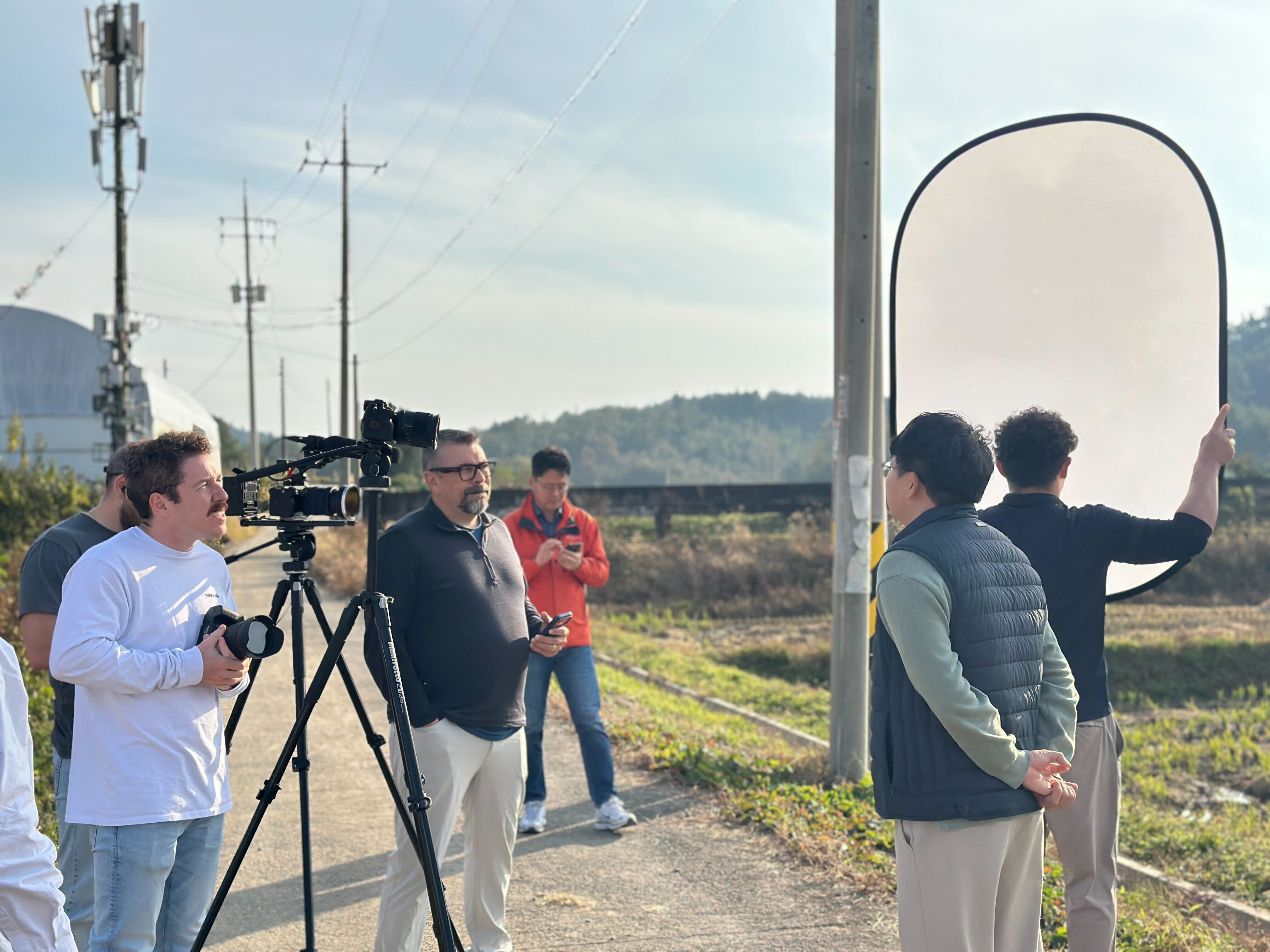
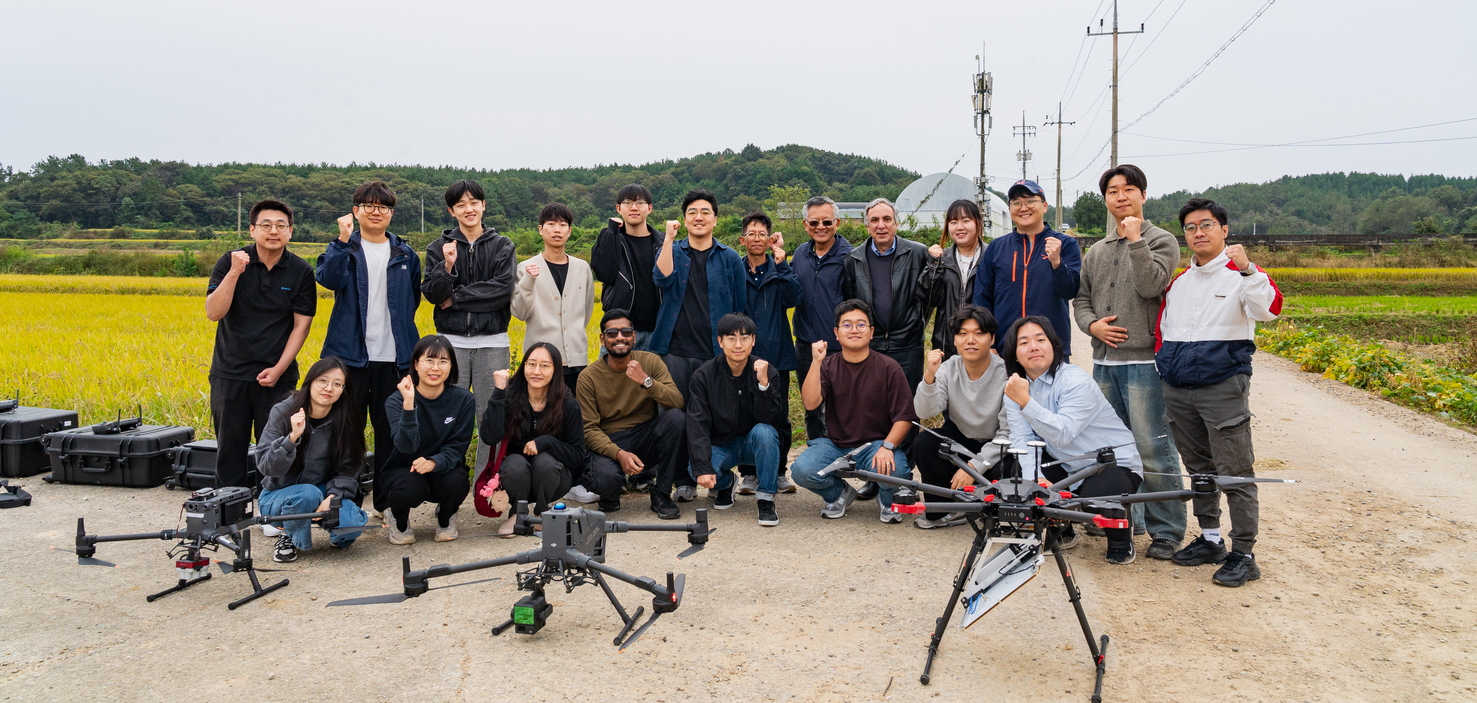
Researchers from Technische Universität Dresden visited our HydroAI Lab to exchange ideas on forest health modeling and remote sensing based prediction systems. During the visit, the TUD team introduced their physical models for assessing forest stress, growth dynamics, and long term ecosystem stability. We discussed how satellite and drone based observations such as vegetation water content, canopy temperature, microwave signals, and multispectral indicators can be integrated to refine and validate these physical models. By linking physical process based modeling with AI driven data fusion, both teams explored how remotely sensed information can significantly improve the prediction of forest health, early stress detection, and long term resilience under climate driven disturbances. This collaboration marks an important step toward combining remote sensing, AI, and physical understanding to advance forest monitoring near Dresden and in Korea.